by Cynthia Greenfield August 23, 2022
DISCLAIMER: We recommend consulting with your health care professional before use. This article does not contain medical advice.
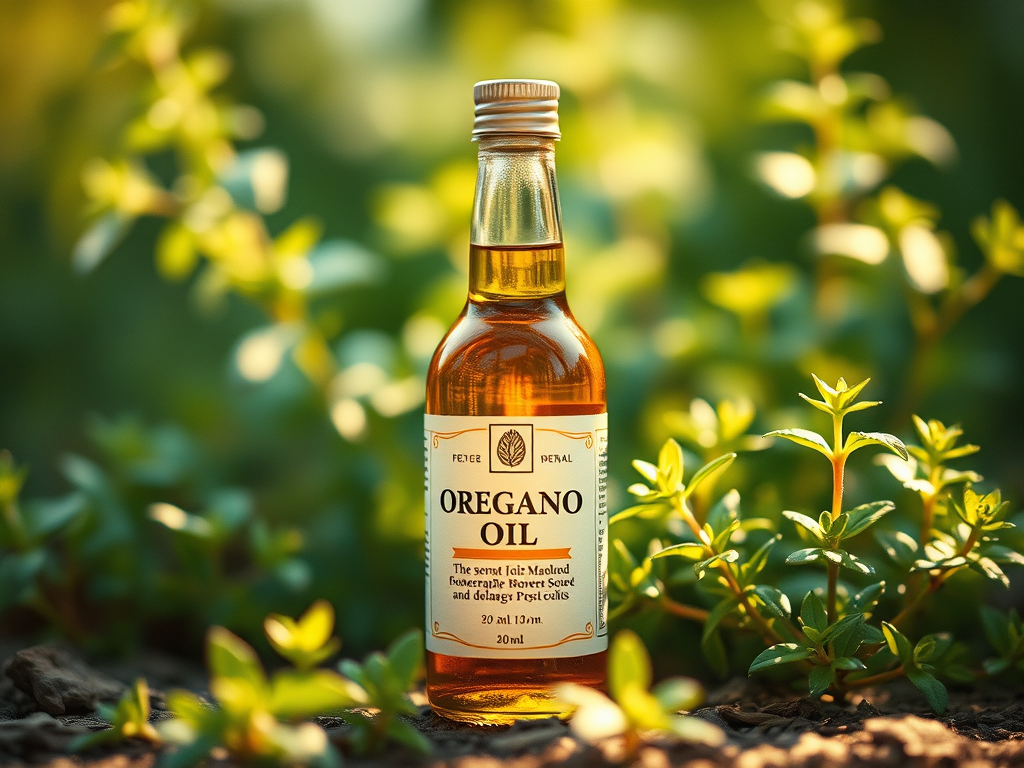
Oregano oil is amazing! It is an antioxidant, antibacterial, antiviral, and antiparasitic. Wow! Here are some of the regular, physical benefits of taking it:
- Balances gut microbiome
- Improves immune response and respiratory function
- Rich in antioxidants & phytochemicals
- Antimicrobial and antifungal – natural
- Improves mood and promotes good mental health
Oregano oil improves mental health and alleviates anxiety and depression
Studies show that oregano extracts can help alleviate symptoms of depression and anxiety in humans and animals. Oregano oil contains carvacrol, a potent medicinal compound that reduces symptoms of anxiety and depression, by increasing levels of dopamine and serotonin in the brain,
Oregano Oil’s Effects on Brain Chemistry
Mediterranean oregano (Oreganum vulgarae), has the highest level of the potent phenol and terapene, Cervacrol. Carvacrol can cross the blood-brain barrier and penetrate into neurons to affect their activity.
- Carvacrol inhibits monoamine oxidase activity, meaning it prevents the monoamine oxidase enzyme from inactivating neurotransmitters (5).
- Carvacrol also blocks the reuptake of monoamine neurotransmitters, including dopamine and serotonin (5). This allows dopamine and serotonin to keep binding to their receptors in the synapse, increasing their signaling to the postsynaptic neuron.
Inhibiting monoamine oxidase and blocking monoamine neurotransmitter reuptake results in higher levels of dopamine and serotonin in the brain. Studies on rats produced these results in the prefrontal cortex. (6)
Increased levels of dopamine and serotonin in the brain are associated with:
- Higher motivation levels
- Increased focus
- Improved mood
- Reduced appetite
Oregano oil can also help with learning and cognition. Oregano extract was shown to increase levels of brain-derived neurotrophic factor (BDNF) in rat models of anxiety (7).
BDNF is a peptide (a small protein fragment) that is essential for learning and memory formation (9). BDNF levels are reduced in depressed and anxious individuals, and levels increase in people who recover from depression (8).
Key Terms
Neurotransmitter – A small molecule that transmits chemical signals from one neuron to another
Neuronal Synapses – The gaps between neurons where neurotransmitters are released
Reuptake – The process of taking up neurotransmitters from neuronal synapses to recycle them
Monoamine Oxidase (MAO) – An enzyme that oxidizes monoamines to remove their amine groups. Monoamine oxidase inactivates neurotransmitters.
Dopamine – A neurotransmitter that plays key roles in motivation, learning, mood, and motor function. Dopamine is released during pleasurable activities, but it is more accurately a behavioral reinforcement neurotransmitter than a pleasure neurotransmitter. Dopamine levels decrease in depression and increase in certain parts of the brain in schizophrenia.
Serotonin – A neurotransmitter that is important for feeding, mood, sleep, and many physiological functions. Serotonin levels can decrease during depression and anxiety.
Brain-Derived Neurotrophic Factor (BDNF) – A peptide (small protein fragment) that is essential for learning and memory formation. BDNF levels are reduced in depressed and anxious individuals, and increase in people who recover from depression.
Carvacrol – One of the most common and potent phenols and terpenes in oil of Oreganum vulgarae, or Mediterranean oregano.
The Role of Neurotransmitters in Mental Health
Neurotransmitters are small molecules that transmit chemical signals from one neuron to another.
They are released at neuronal synapses, small gaps between the tree-like outgrowths in neurons called axons and dendrites that transmit information between neighboring neurons.
When neurotransmitters are released, they bind to neurotransmitter receptors on the opposite side of the synapse, sending signals to the postsynaptic neuron.
After a neurotransmitter has done its job of signaling, it can be recycled by the presynaptic neuron to be reused in a process known as reuptake.
Neurotransmitters can be inactivated by monoamine oxidases (MAOs), enzymes that break down monoamines (chemicals that include neurotransmitters).
Two important ways of changing the amount of neurotransmitters available in a synapse are 1) regulating reuptake and 2) regulating MAO activity.
If we reduce one of these processes, we increase the amount of neurotransmitters in a synapse and thus increase the activity of that neurotransmitter.
Two of the most important neurotransmitters for mental health are dopamine and serotonin.
Dopamine plays key roles in motivation, learning, mood, and motor function (1). Dopamine is released during pleasurable activities, but it is more accurately a behavioral reinforcement neurotransmitter than a pleasure neurotransmitter. Dopamine levels decrease in depression and increase in certain parts of the brain in schizophrenia (2).
Serotonin is important for feeding, mood, sleep, and many physiological functions. In the 1960s, psychiatrist Alec Coppen proposed that low serotonin levels are responsible for depression, and this hypothesis has been used for many decades to understand depression (3,4). Although serotonin levels decrease during depression, the causes of depression can be numerous and complex (3).
Conclusions
Let’s review what we’ve learned.
- Neurotransmitters play a critical role in mental health.
- Oregano oil contains carvacrol, a medicinal compound that can inhibit monoamine oxidase activity and block monoamine neurotransmitter reuptake.
- Inhibiting monoamine oxidase activity and blocking neurotransmitter reuptake increases amounts of dopamine and serotonin in certain parts of the brain, reducing symptoms of anxiety and depression.
Get Oregano Oil here Greenfield Botanics Therapeutic Grade Wild Mediterranean Oregano Oil
https://greenfieldbotanics.com/
References
- Berke JD. What does dopamine mean? Nat Neurosci. 2018 Jun;21(6):787-793. doi: 10.1038/s41593-018-0152-y. Epub 2018 May 14. PMID: 29760524; PMCID: PMC6358212.
- Pu, J., Liu, Y., Gui, S. et al. Metabolomic changes in animal models of depression: a systematic analysis. Mol Psychiatry 26, 7328–7336 (2021). https://doi.org/10.1038/s41380-021-01269-w
- Moncrieff, J., Cooper, R.E., Stockmann, T. et al. The serotonin theory of depression: a systematic umbrella review of the evidence. Mol Psychiatry (2022). https://doi.org/10.1038/s41380-022-01661-0
- Coppen A. The biochemistry of affective disorders. Br J Psychiatry. 1967 Nov;113(504):1237-64. doi: 10.1192/bjp.113.504.1237. PMID: 4169954.
- Mechan, A., Fowler, A., Seifert, N., Rieger, H., Wöhrle, T., Etheve, S., . . . Mohajeri, M. (2011). Monoamine reuptake inhibition and mood-enhancing potential of a specified oregano extract. British Journal of Nutrition, 105(8), 1150-1163. doi:10.1017/S0007114510004940
- Zotti M, Colaianna M, Morgese MG, Tucci P, Schiavone S, Avato P, Trabace L. Carvacrol: from ancient flavoring to neuromodulatory agent. Molecules. 2013 May 24;18(6):6161-72. doi: 10.3390/molecules18066161. PMID: 23708230; PMCID: PMC6270539.
- Mohseni-Moghaddam, P., Dogani, M., Hatami, M., Roohollahi, S., Amiresmaeli, A., & Askari, N. (2022). A behavioral and molecular study; ameliorated anxiety-like behavior and cognitive dysfunction in a rat model of chronic unpredictable stress treated with oregano extract. Brain and Behavior, 00, e2727.
- Eero Castrén, Lisa M. Monteggia. Brain-Derived Neurotrophic Factor Signaling in Depression and Antidepressant Action. Biological Psychiatry. Volume 90, Issue 2. 2021
- Cunha C, Brambilla R, Thomas KL. A simple role for BDNF in learning and memory? Front Mol Neurosci. 2010 Feb 9;3:1. doi: 10.3389/neuro.02.001.2010. PMID: 20162032; PMCID: PMC2821174.

 Grapevine Center